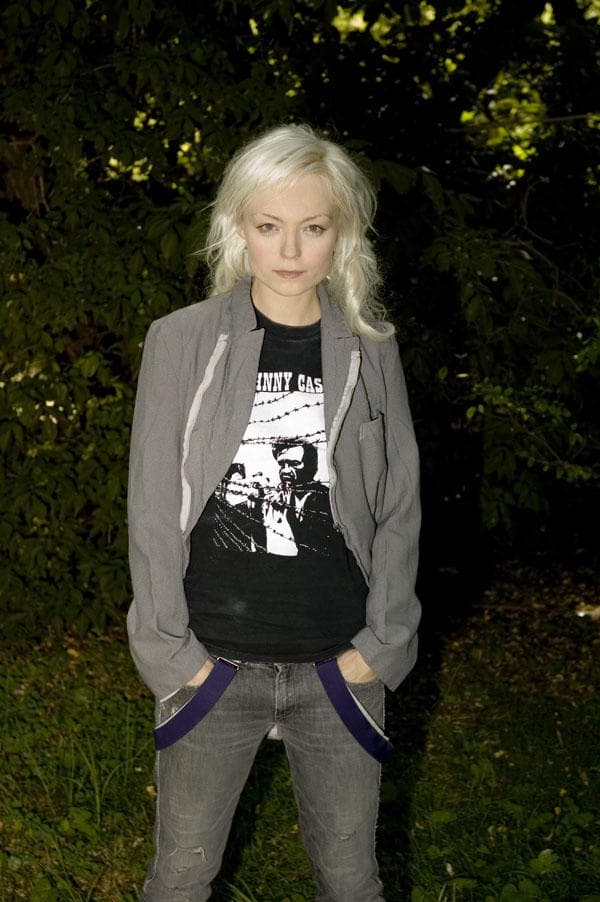
Chinawoman
Smoky, low-register vocals over vintage synths and drum machines. It sounds like a lonely cabaret in a cold city, blending Soviet nostalgia with bedroom-pop intimacy.
Smoky, low-register vocals over vintage synths and drum machines. It sounds like a lonely cabaret in a cold city, blending Soviet nostalgia with bedroom-pop intimacy.
Michelle Gurevich, formerly known as Chinawoman, occupies a unique niche in the independent music landscape, bridging Canadian bedroom-pop sensibilities with a deep Russian heritage. Her sound identity is built on a foundation of 'slowcore' and 'lo-fi pop,' characterized by minimalist arrangements, vintage synth textures, and a signature low-register vocal style that avoids traditional pop ornamentation in favor of a deadpan, narrative delivery.
Her career arc began with the self-released 'Party Girl' in 2007, which gained significant traction in Eastern Europe, particularly Russia, Turkey, and Poland, where her aesthetic resonated with a cultural nostalgia for Soviet-era chanson and cabaret. Critically, she is noted for her 'one-woman-band' approach, engineering and producing her own work to maintain a specific, murky sonic signature. Her influence web includes the dramatic flair of Charles Aznavour and the dark romanticism of Leonard Cohen, yet her use of cheap drum machines and skeletal arrangements places her alongside contemporary art-pop minimalists. She represents a bridge between the immigrant experience and the globalized indie scene, creating music that functions as a soundtrack for the 'lost-in-the-world' children of the diaspora.
Shares darkwave, deadpan, fog, urban_night (subgenre)
Shares art pop, candlelit, chamber pop, indie pop (subgenre)
Shares art pop, candlelit, indie pop, crooning (subgenre)
Shares slowcore, art pop, candlelit, bedroom_production (subgenre)
Shares art pop, indie pop, fog, urban_night (subgenre)
Shares deadpan, fog, urban_night, minimalist (vocal style)
Cassette uses generative AI to enrich its catalog. How we use AI →