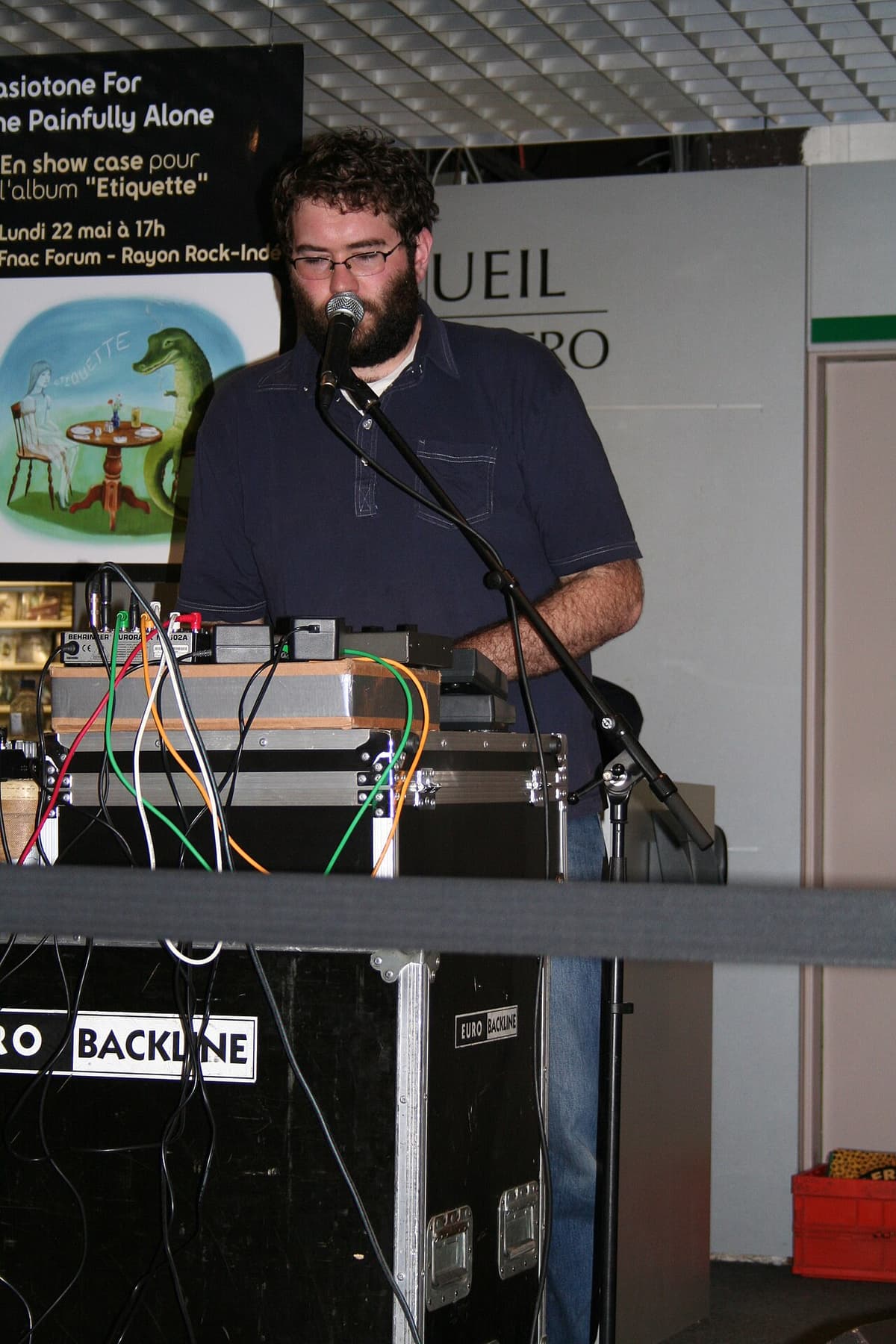
Casiotone for the Painfully Alone
Sparse, melancholic stories told through cheap keyboards and drum machines. It feels like a late-night bus ride through a lonely city. For the quiet observers.
Sparse, melancholic stories told through cheap keyboards and drum machines. It feels like a late-night bus ride through a lonely city. For the quiet observers.
Casiotone for the Painfully Alone sounds like the internal monologue of a person who spends a lot of time in transit. The sonic palette is intentionally limited, built around the thin, charmingly artificial sounds of consumer-grade keyboards and the steady, unfeeling pulse of preset drum machine beats. It is music that embraces its own smallness, creating a sense of profound intimacy through its lack of polish and its focus on the hum of the machine.
What makes Owen Ashworth’s work truly distinctive is the contrast between the cold, electronic instrumentation and the deeply human, often devastating narratives he delivers in a flat, unaffected baritone. He writes character studies that feel like short stories, capturing the specific heartbreak of suburban sprawl, failed relationships, and the quiet desperation of everyday life. The music doesn't try to overwhelm you; it sits beside you in the dark.
Start with 'Etiquette' for a slightly more polished entry point that introduces acoustic textures, or dive straight into 'Answering Machine Music' to hear the project at its most raw and essential. It is the perfect companion for moments of solitary reflection when you want music that understands the weight of being alone without trying to fix it.
Casiotone for the Painfully Alone (CFTPA) was the musical solo-project of musician Owen Ashworth (born April 22, 1977) of Redwood City, California. CFTPA was active from 1997 to 2010, and released five studio albums, alongside numerous other releases. CFTPA toured with other indie artists such as The Donkeys, Papercuts, P:ano, The Dead Science, David Bazan, The Rapture, and Xiu Xiu. Following the end of CFTPA, Ashworth began a new project, Advance Base.
Shares indie pop, synth-pop, lo-fi hip-hop (subgenres); bedroom production, lo fi, drum machine (production style)
Shares bedroom production, lo fi, drum machine (production style); melancholic, wistful, lonely (moods)
Shares melancholic, wistful, lonely (moods); bedroom production, lo fi, minimalist (production style)
Shares bedroom production, lo fi, minimalist (production style); solitude, late night, rainy day (atmosphere)
Shares melancholic, wistful, lonely (moods); late night, urban night, solitude (atmosphere)
Shares lo fi, bedroom production, tape saturation (production style); late night, urban night, solitude (atmosphere)
Shares bedroom production, lo fi, tape saturation (production style); late night, solitude, rainy day (atmosphere)
Shares bedroom production, lo fi, minimalist (production style); late night, urban night, solitude (atmosphere)
Shares lo-fi hip-hop, indie pop, synth-pop (subgenres); lo fi, tape saturation, bedroom production (production style)
Shares melancholic, wistful, lonely (moods); lo fi, minimalist, bedroom production (production style)
Shares bedroom production, deadpan, lo-fi hip-hop, tape saturation (signature)
Cassette uses generative AI to enrich its catalog. How we use AI →


