Cadillac represents the peak of polished Spanish pop from the early 1980s, blending the sophisticated vocal arrangements of classic pop with the emerging electronic textures of the decade. Their sound is defined by a bright, optimistic energy that feels inextricably linked to the post-Movida Madrileña era, where traditional songwriting met the dancefloor.
What makes them truly distinctive is their commitment to vocal harmony. While many of their contemporaries leaned into the gritty side of new wave, Cadillac maintained a high-gloss production style that showcased intricate multi-part singing over funky basslines and shimmering synthesizers. It is music that feels expensive and meticulously crafted, yet remains completely accessible.
Start with the 1985 album Funkyllac to hear them at their most rhythmic and commercial, or dive into their Eurovision entry Valentino for a masterclass in mid-80s melodic pop. It is the perfect soundtrack for anyone who loves the intersection of Latin melody and synth-pop precision.
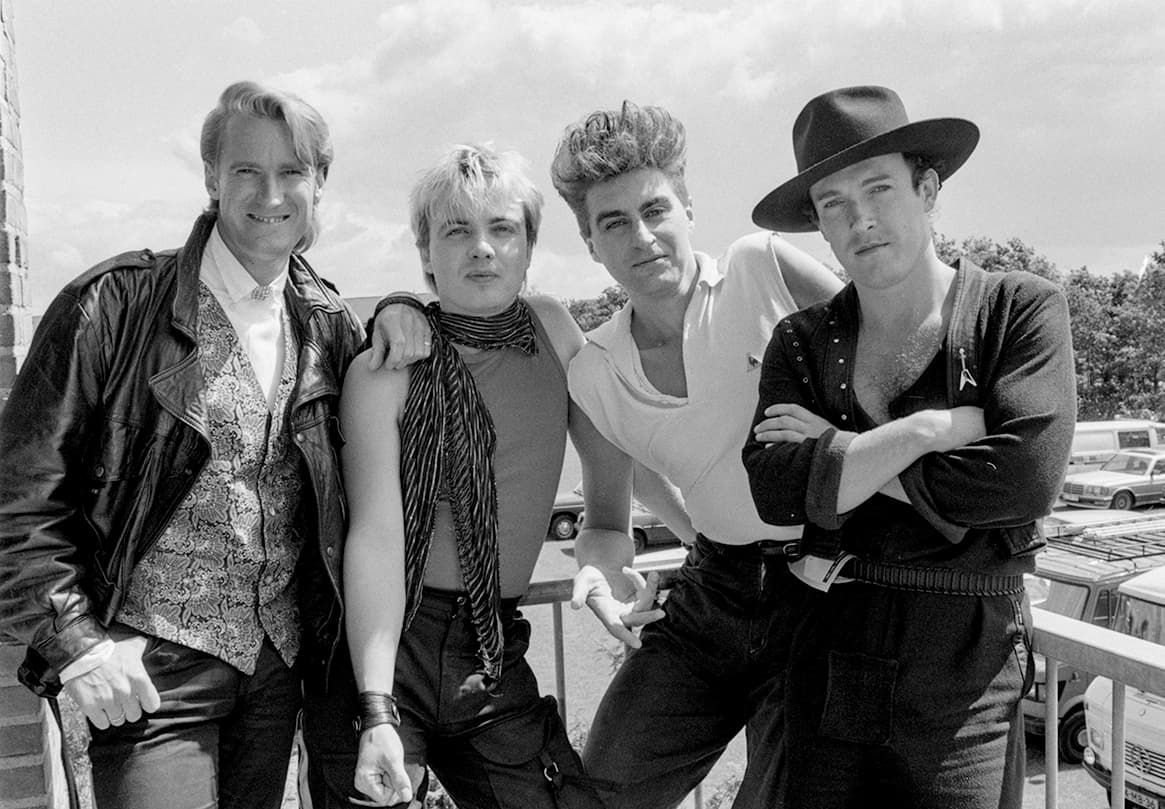
Cadillac were a Spanish pop group, active between 1981 and 1986. They are known internationally for their participation in the 1986 Eurovision Song Contest. The group was founded in Madrid in 1981 by José María Guzmán (vocals/guitar) and Eduardo Ramírez (vocals/bass). They recruited Pedro Sánchez (vocals/keyboards) and Javier de Juan (drums) to form a quartet. Their first album, Pensando en tí, was released later that year to critical approval but only modest sales. Javier de Juan left the group in 1982 and was replaced by Daniel Jacques. Cadillac's second and third albums. Llegas de madrugada and Un día mas, also failed to sell in large quantities. Ramírez left the group, unhappy with decisions made by their record company, and Pepe Marchante came in as bassist. The group finally made a commercial breakthrough in 1985 with the album Funkyllac, which contained the hit single "Arturo" and featured harder rhythms which proved popular with record buyers. In 1986, Cadillac were chosen by broadcaster Televisión Española as the Spanish representatives for the 31st Eurovision Song Contest with the Guzmán-composed song "Valentino". That year's contest took place on 3 May in Bergen, Norway, where "Valentino" placed tenth of the 20 entries. Marchante left the group in 1986, and this ultimately led to their decision to disband later that year.


Shares studio polished, analog warmth, drum machine (production style); synth-pop, disco, new wave (subgenres)
Shares studio polished, analog warmth, drum machine (production style); synth-pop, disco, new wave (subgenres)
Shares synth-pop, disco, new wave (subgenres); studio polished, analog warmth, drum machine (production style)
Shares studio polished, analog warmth, drum machine (production style); playful, energetic, nostalgic (moods)
Shares studio polished, analog warmth, drum machine (production style); harmonized, crooning, baritone (vocal style)
Shares disco, synth-pop, funk (subgenres); studio polished, analog warmth, layered dense (production style)
Shares studio polished, analog warmth, drum machine (production style); disco, funk, synth-pop (subgenres)
Shares studio polished, analog warmth, drum machine (production style); disco, synth-pop, funk (subgenres)
Shares studio polished, analog warmth, drum machine (production style); urban night, summer, rooftop (atmosphere)
Shares latin pop, romantic, synth-pop, drum machine (signature)
Cassette uses generative AI to enrich its catalog. How we use AI →