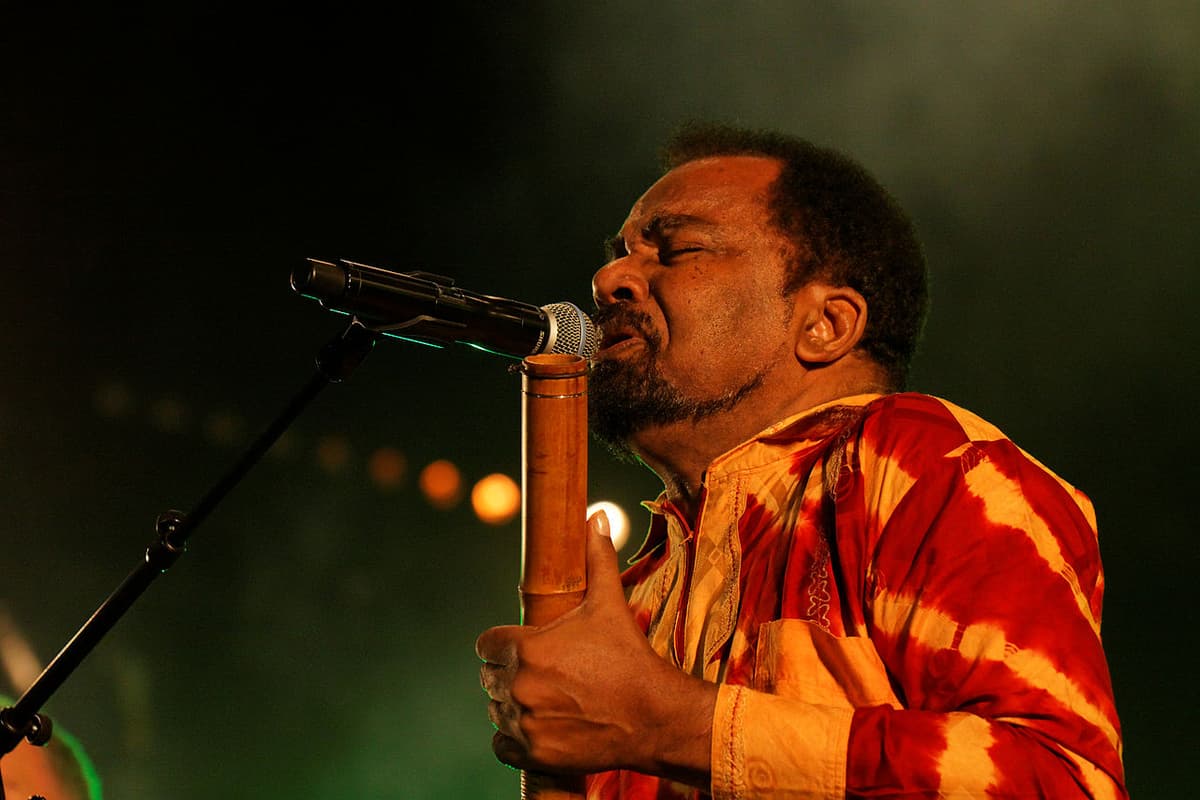
Bonga
Gravel-voiced Angolan semba that balances the ache of exile with a resilient, rhythmic pulse. Warm acoustic guitars and soulful, sandpaper vocals for quiet defiance.
Gravel-voiced Angolan semba that balances the ache of exile with a resilient, rhythmic pulse. Warm acoustic guitars and soulful, sandpaper vocals for quiet defiance.
Bonga sounds like a voice that has lived several lifetimes and kept the receipts. His music is centered on the 'semba' rhythm of Angola, but it is stripped of any glossy studio sheen. Instead, you get the tactile warmth of nylon-string guitars, the rhythmic scrape of the reco-reco, and a vocal delivery so raspy and textured it feels like sandpaper on velvet. It is music that carries the weight of history without being crushed by it.
What makes Bonga truly distinctive is the 'saudade' - that specific Lusophone brand of longing - filtered through an African lens. Even when the tempo picks up and the percussion invites you to move, there is a persistent, soulful melancholy in his tone. He pioneered a sound that was both a political weapon during the Angolan struggle for independence and a deeply personal diary of a man in exile, creating a bridge between traditional folk and urban soul.
Start with the landmark album 'Angola 72'. It is a masterclass in minimalist intensity, recorded while he was a political exile in the Netherlands. The tracks are hauntingly sparse, allowing his incredible voice to occupy the center of the room. It is the perfect entry point for understanding how rhythm can be both a celebration and a form of resistance.
José Adelino Barceló de Carvalho (born 5 September 1942), better known as Bonga, is an Angolan folk and semba singer-songwriter.
Cassette uses generative AI to enrich its catalog. How we use AI →


