Beatrice
Gritty, defiant Hungarian rock that bridges the gap between pub-stomp anthems and anti-establishment punk. Raw energy for the working class soul.
Gritty, defiant Hungarian rock that bridges the gap between pub-stomp anthems and anti-establishment punk. Raw energy for the working class soul.
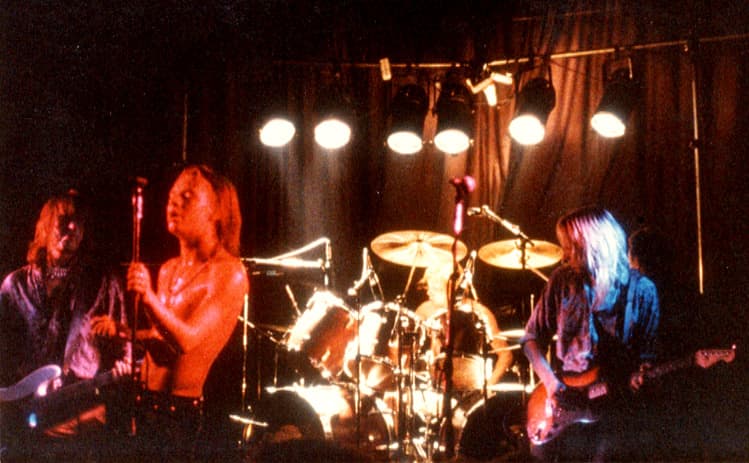
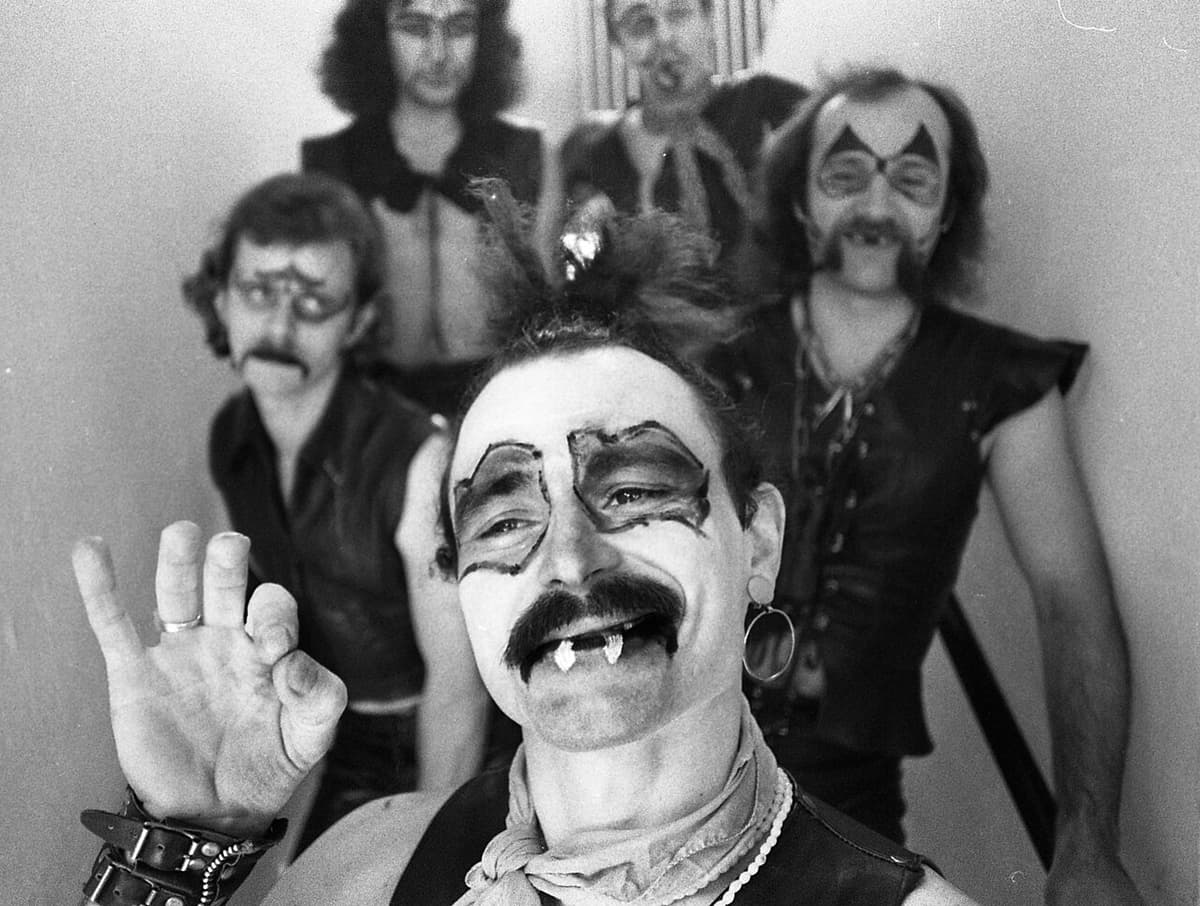
Beatrice sounds like the friction between a cold concrete city and the fire of a crowd that has had enough. It is music built on the bones of hard rock, with a heavy, driving rhythm section and guitars that bite rather than shimmer. Nagy Fero's vocals are the centerpiece: raspy, unpolished, and dripping with an authenticity that cannot be faked. It is the sound of a band that was banned because they were too honest.
What makes them distinctive is how they managed to weave traditional Hungarian folk sensibilities into a framework of aggressive rock and punk. This is not 'folk-rock' in the gentle sense; it is the use of local melodic structures to make their rebellion feel specific to their home. They captured the hopelessness of everyday life under socialism and turned it into a loud, communal exorcism that resonated deeply with the youth of the era.
Start with the 1991 compilation 'A Beatrice legjobb dalai' to hear their most iconic anthems like '8 óra munka'. It provides the perfect entry point into their blend of catchy, blue-collar hooks and the sharp political edge that defined their legendary status in Eastern European rock history.
Beatrice (or simply Ricse, sometimes referred to as Nagy Feró és a Beatrice or Nagyferó és a Beatrice) is a Hungarian rock band. It was founded in 1969 as a women's band, and played mostly cover songs. In 1971, Nagy Feró joined the band as a frontman. In the following years, the members were gradually replaced, and from 1974 they began to write their own songs in the then popular glam rock style. In order to get a record deal the band became oriented towards disco music from 1976. The group disbanded in 1977, and in the following year, Beatrice was reunited as a rock band by Nagy Feró with bassist Miklóska Lajos, guitarist Lugosi László, keyboardist Gidófalvy Attila, and drummer Donászy Tibor, and started playing rock in a similar style to AC/DC. At this time they wrote songs that have since become classics, about the hopelessness of everyday life, such as Jericho, the Metropolitan Wolf, and the Angel Land. The party-state culture policy consistently hampered the "unmanageable" band, which eventually disbanded in 1981. Beatrice, after its reunion in 1987, became a success in an atmosphere of regime change. In 1988, they self-published their first album. Their second album, Utálom az egész XX. századot (1991), was featured on the Mahasz disk sales top list for 40 weeks, at some point reaching first place. Beatrice's biggest hit to date is 8 óra munka. During this period, their concerts would all sell out. By 1994, the band was practically depleted: besides Nagy Feró, only guitarist Brúger László remained in the band. For this reason, Nagy Feró reorganized the orchestra, which was from 1994 officially called New Beatrice, and had a constantly changing lineup. The "new" attribute was later abandoned, however, and in recent years their concerts have often been advertised as "Nagy Feró és a Beatrice". Released in 2010, the concert video of the band's 30th anniversary was ranked 1st in the Mahasz DVD list.
Shares hard rock, punk rock, folk rock (subgenres); lo fi, live recording, analog warmth (production style)
Shares lo fi, live recording, analog warmth (production style); hard rock, punk rock (subgenres)
Shares lo fi, live recording, analog warmth (production style); defiant, rebellious, brooding (moods)
Shares lo fi, live recording, analog warmth (production style); rebellious, defiant, energetic (moods)
Shares hard rock, punk rock (subgenres); basement show, dive bar, urban night (atmosphere)
Shares defiant, energetic, rebellious (moods); lo fi, live recording, analog warmth (production style)
Shares lo fi, live recording, analog warmth (production style); defiant, rebellious, brooding (moods)
Shares hard rock, punk rock (subgenres); basement show, dive bar, urban night (atmosphere)
Shares lo fi, live recording, analog warmth (production style); hard rock, punk rock (subgenres)
Shares punk rock, defiant, hard rock, gravelly (signature)
Shares social commentary, raspy, punk rock, hard rock (signature)
Cassette uses generative AI to enrich its catalog. How we use AI →