Autopsia sounds like the weight of European history compressed into a single, slow-motion exhale. It is music that feels architectural, constructed from the rubble of classical music, religious liturgy, and industrial decay. The sound is dominated by deep, resonant choral samples and orchestral loops that have been weathered and aged, as if they were recovered from a damp basement in Prague. There is a sense of immense scale, but it is the scale of a ruin rather than a monument.
What makes them truly distinctive is their use of 'martial' elements without the typical aggression of the genre. Instead of a call to war, their percussion feels like a funeral procession or a ritualistic measurement of time. The integration of spoken word and philosophical fragments creates a sense of being lectured by a ghost. It is deeply intellectual music that prioritizes atmosphere and conceptual depth over traditional song structure, creating a sonic space that is both claustrophobic and infinite.
Start with 'Death Is the Mother of Beauty' to experience their most iconic blend of neoclassical elegance and industrial dread. It serves as a perfect entry point into their world of 'impersonal' art, where the individual creator disappears behind a wall of historical and religious iconography. It is essential listening for anyone who finds beauty in the somber, the old, and the slightly unsettling.
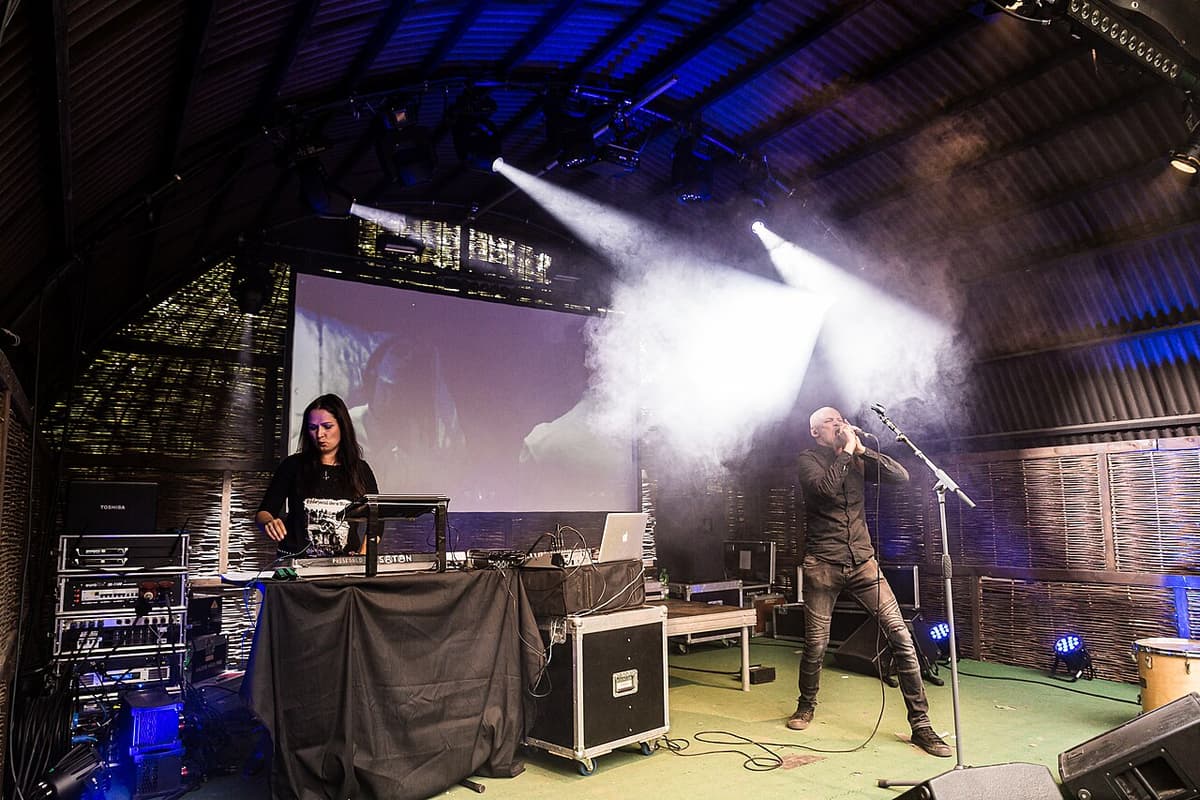
Autopsia is a European art project focused on music and visual production, gathering authors of different professions in the realization of multimedia projects. Its art practice began in London in the late 1970s and continued during the 1980s in the former Yugoslavia. Since 1990, Autopsia has been based in Prague, Czech Republic. At the beginning of its activity, Autopsia issued dozens of mini-recordings. In the period after 1989, twenty CDs were issued, at first for Staalplaat, then for German label Hypnobeat and London's Gymnastic Records. One of its compositions is a part of the soundtrack for Peter Greenaway's The Pillow Book (1996).


Shares neoclassical, industrial (subgenres); layered dense, reverb heavy, orchestral arrangement (production style)
Shares neoclassical, industrial (subgenres); reverb heavy, layered dense, sample based (production style)
Shares brooding, mysterious, somber (moods); reverb heavy, layered dense, sample based (production style)
Shares neoclassical, industrial (subgenres); orchestral arrangement, reverb heavy, layered dense (production style)
Shares layered dense, orchestral arrangement, analog warmth (production style); neoclassical, industrial (subgenres)

Shares neoclassical, industrial (subgenres); reverb heavy, layered dense, sample based (production style)
Shares reverb heavy, sample based, layered dense (production style); neoclassical, industrial (subgenres)
Shares neoclassical, industrial (subgenres); cathedral, fog, urban night (atmosphere)
Shares neoclassical, industrial (subgenres); layered dense, reverb heavy, orchestral arrangement (production style)
Shares martial industrial, cathedral, neoclassical, choir/choral (signature)
Cassette uses generative AI to enrich its catalog. How we use AI →