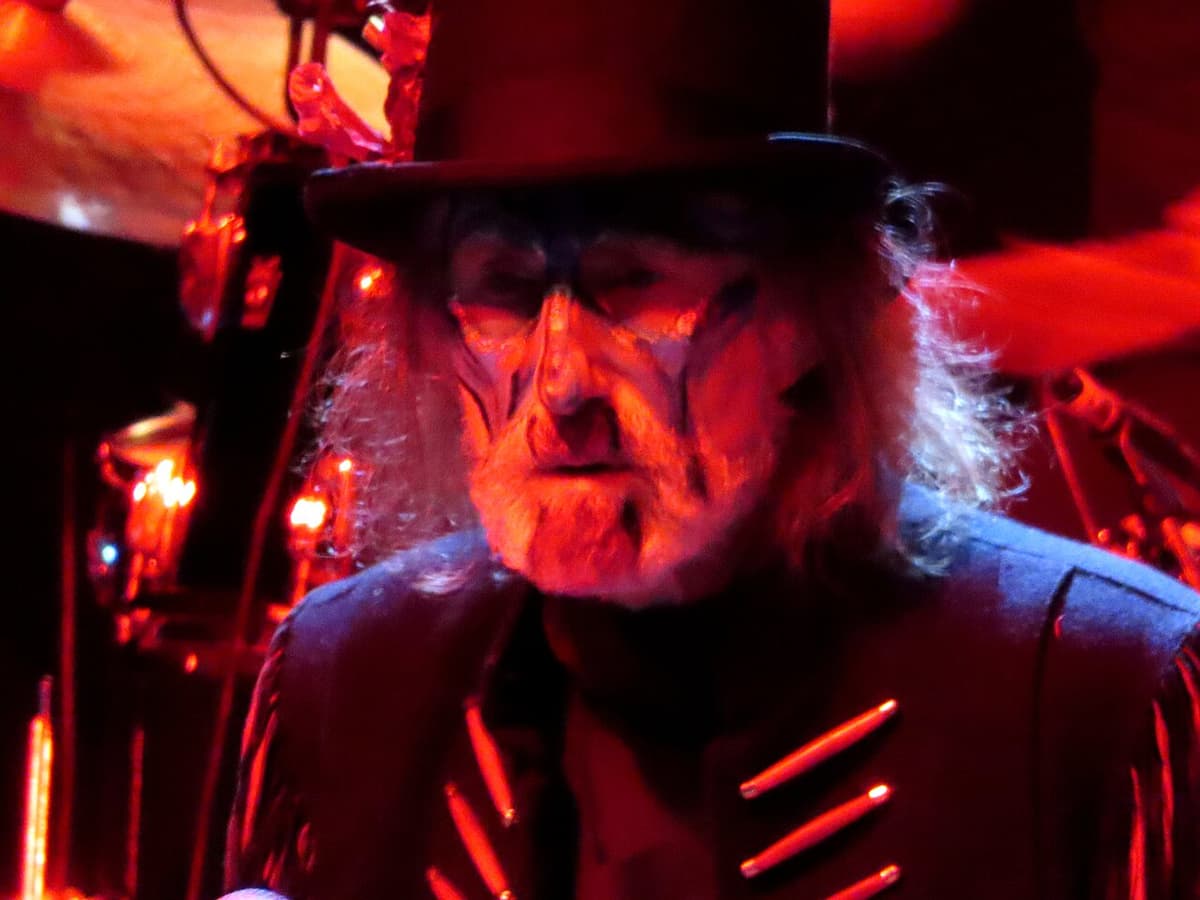
Arthur Brown
Explosive psychedelic rock led by a four-octave operatic roar and swirling Hammond organs. The sound of 1968 catching fire. Perfect for high-energy, weird nights.
Explosive psychedelic rock led by a four-octave operatic roar and swirling Hammond organs. The sound of 1968 catching fire. Perfect for high-energy, weird nights.
Arthur Brown sounds like a Victorian ghost who has just discovered a stack of soul records and a gallon of high-octane fuel. His music is defined by a manic, unhinged energy that bridges the gap between the bluesy grit of the 1960s and the theatrical excess of the 1970s. It is dominated by Vincent Crane's aggressive, distorted organ work and Brown's own voice, which can pivot from a rich, soulful baritone to a glass-shattering banshee wail in a single heartbeat.
What truly sets him apart is the sheer commitment to the performance. This isn't just rock music; it is shock rock in its purest, most primordial form. While his contemporaries were exploring flower power, Brown was exploring the 'God of Hellfire' persona, bringing a sense of danger and occult mystery to the pop charts. The lack of traditional electric guitar in his most famous work gives the music a unique, keyboard-heavy density that feels both ancient and futuristic.
Start with the 1968 self-titled debut, 'The Crazy World of Arthur Brown'. It is the definitive document of his peak powers, containing the massive hit 'Fire' alongside deep cuts that showcase his experimental, progressive tendencies. It is an essential listen for anyone who wants to hear the exact moment psychedelic rock began to mutate into something heavier and more theatrical.
Arthur Wilton Brown (born 24 June 1942) is an English singer and songwriter best known for his flamboyant and theatrical performances, eclectic (and sometimes experimental) work and his powerful, wide-ranging operatic voice, in particular his high pitched banshee screams. He is also notable for his unique stage persona, featuring extreme facepaint, movement, dance, costume changes and a burning helmet. Brown has been the lead singer of various groups, most notably the Crazy World of Arthur Brown and Kingdom Come, followed by a varied solo career as well as associations with Hawkwind, the Who and Klaus Schulze. In the late 1960s, the Crazy World of Arthur Brown's popularity was such that the group shared bills with the Who, Jimi Hendrix, Frank Zappa's The Mothers of Invention, the Doors, Small Faces and Joe Cocker, among others. He is best known for the Crazy World of Arthur Brown's 1968 single "Fire", reaching number one in the UK Singles Chart and Canada, and number two on the US Billboard Hot 100 and number three in the German charts, as well as its parent album The Crazy World of Arthur Brown which reached number 2 in the UK, number 6 in Canada, and number 7 in the US. Following the success of the single "Fire", the press would often refer to Brown as "The God of Hellfire", in reference to the opening shouted line of the song, a moniker that exists to this day. Overlooked upon release, Kingdom Come's 1973 album Journey has received generally positive retrospective reviews from critics. Alan Holmes of Freq said that "Journey was so far ahead of its time that you have to keep checking the sleeve to make sure that it really does say 1973 and not 1983" and that the album was "not only Arthur Brown's masterpiece, but also one of the truly great albums of the seventies." Although Brown has had limited commercial success and has never released another recording as commercially successful as "Fire", he has remained a significant influence on a wide range of musicians in numerous genres because of his operatic vocal style, wild stage persona and often experimental concepts; he is considered to be a pioneer of shock rock and progressive rock and has had an influence on both electronic and heavy metal music. In 2005, Brown won the 'Showman of the Year' award from Classic Rock magazine, receiving the award at the Classic Rock Roll of Honour Awards ceremony held in London's Café de Paris.
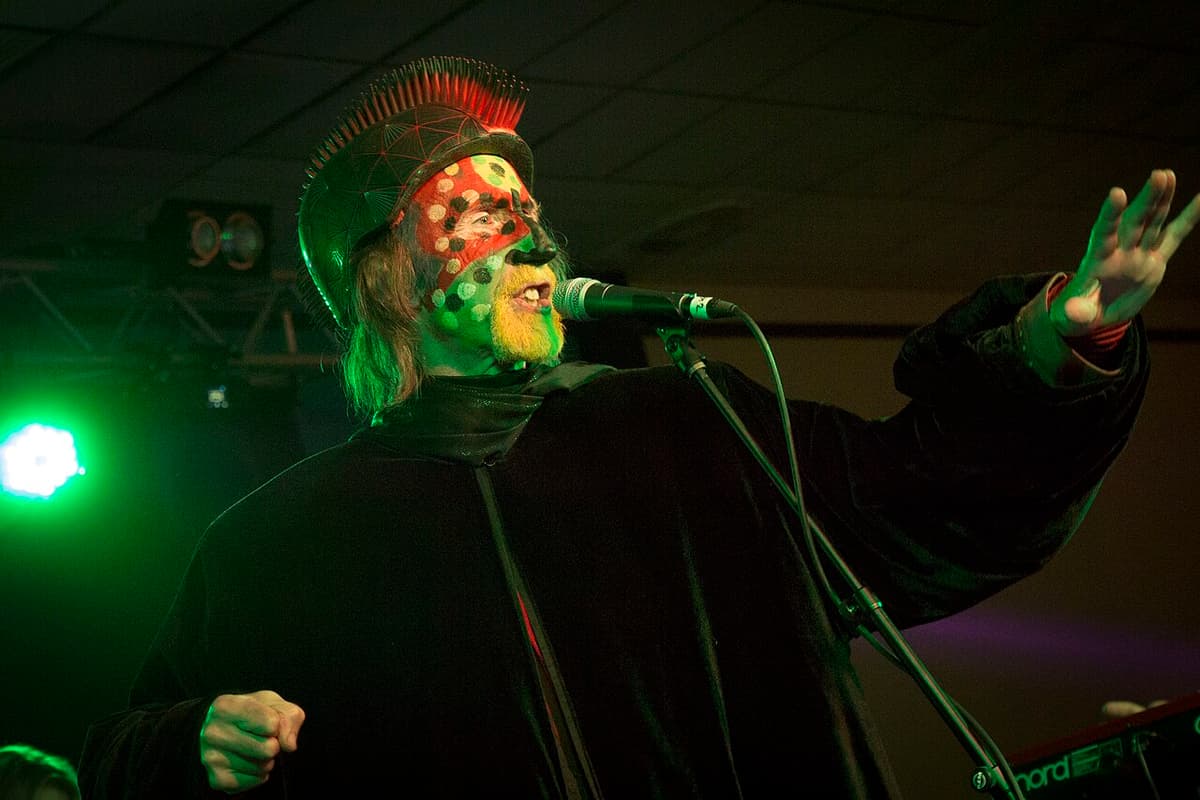
Shares psychedelic rock, progressive rock, art rock (subgenres); intense, rebellious, mysterious (moods)
Shares psychedelic rock, progressive rock, art rock (subgenres); intense, brooding, mysterious (moods)
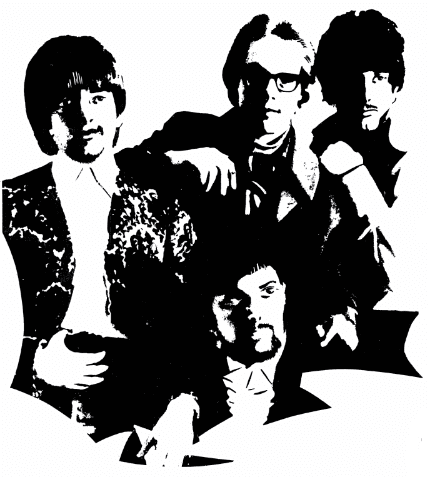
Shares psychedelic rock, progressive rock, art rock (subgenres); analog warmth, reverb heavy, live recording (production style)
Shares psychedelic rock, progressive rock, art rock (subgenres); intense, brooding, rebellious (moods)
Shares psychedelic rock, progressive rock, art rock (subgenres); analog warmth, reverb heavy, live recording (production style)
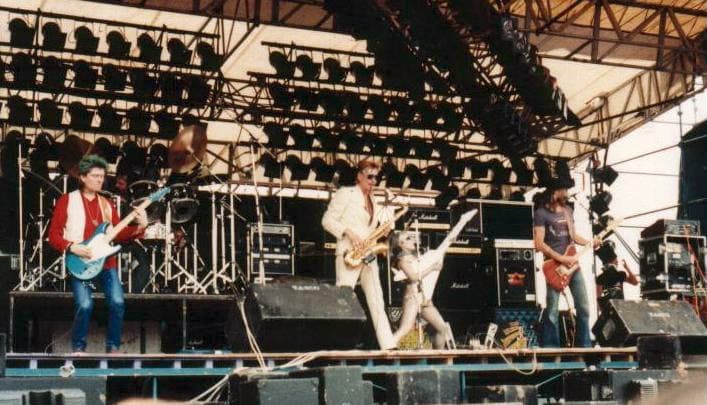
Shares psychedelic rock, progressive rock, art rock (subgenres); intense, rebellious, mysterious (moods)
Shares psychedelic rock, progressive rock, art rock (subgenres); analog warmth, reverb heavy, live recording (production style)
Shares psychedelic rock, progressive rock, art rock (subgenres); intense, brooding, mysterious (moods)
Shares psychedelic rock, progressive rock, art rock (subgenres); analog warmth, live recording, reverb heavy (production style)
Shares psychedelic rock, progressive rock, art rock (subgenres); intense, brooding, mysterious (moods)
Shares organ, progressive rock, psychedelic rock, hard rock (signature)
Shares organ, progressive rock, psychedelic rock, hard rock (signature)
Cassette uses generative AI to enrich its catalog. How we use AI →


