Ange
Theatrical French prog-rock that feels like a medieval fever dream. Grandiose organ swells and dramatic storytelling for fans of high-stakes musical theater.
Theatrical French prog-rock that feels like a medieval fever dream. Grandiose organ swells and dramatic storytelling for fans of high-stakes musical theater.
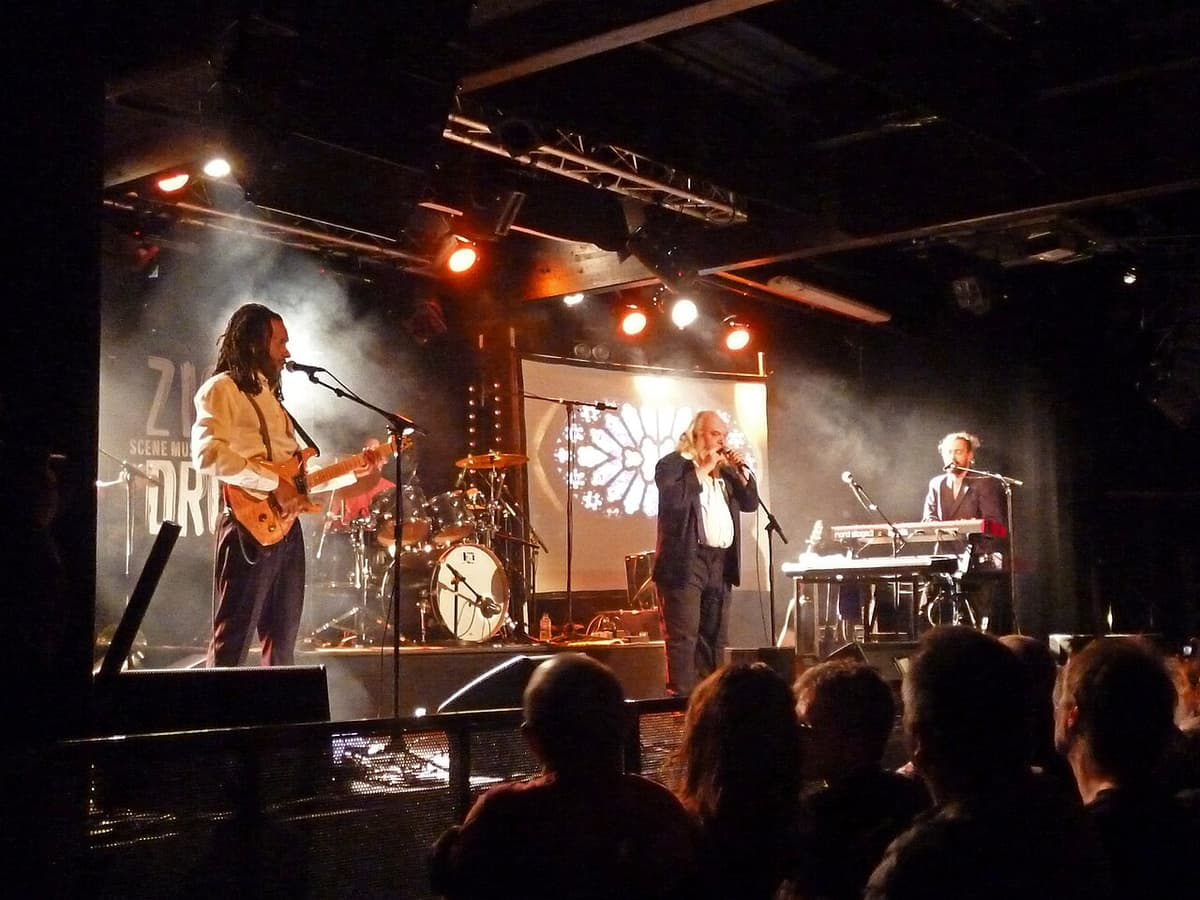
Ange sounds like a troupe of traveling players from the 14th century who somehow stumbled upon a stack of Marshall amps and a Hammond organ. Their music is thick with the smell of old theater wood and damp earth, characterized by Christian Décamps' incredibly expressive, almost possessed vocal delivery that shifts from a conspiratorial whisper to a thunderous roar. It is rock music that refuses to be just rock, insisting instead on being a saga.
What truly sets them apart is their uniquely French approach to the progressive genre. While their English contemporaries were often focused on technical precision or space-age synths, Ange leaned into the grotesque, the pastoral, and the satirical. They use the accordion and the organ not just for melody, but to create a dense, atmospheric fog that feels both ancient and dangerously modern. It is a sound that is deeply rooted in the soil of the Franche-Comté region yet reaches for the surreal.
Newcomers should start with 'Au-delà du délire' or 'Le Cimetière des Arlequins'. These albums represent the peak of their 1970s run, showcasing their ability to turn Jacques Brel-style chanson into sprawling, symphonic epics. It is music for those who want their rock with a heavy dose of drama, mythology, and a touch of the bizarre.
Ange (French pronunciation: [ɑ̃ʒ], lit. 'Angel') is a French progressive rock band formed in September 1969 by the Décamps brothers, Francis (keyboards) and Christian (vocals, accordion, acoustic guitar and keyboards). Since its inception the band's music has been inspired by medieval texts and fantasy.
Shares progressive rock, art rock (subgenres); mysterious, brooding (moods)
Shares progressive rock, art rock (subgenres); mysterious, brooding (moods)
Shares progressive rock, art rock (subgenres); mysterious, brooding (moods)
Shares progressive rock, art rock, folk rock (subgenres); analog warmth, orchestral arrangement, reverb heavy (production style)
Shares progressive rock, art rock (subgenres); analog warmth, orchestral arrangement, reverb heavy (production style)
Shares progressive rock, art rock (subgenres); analog warmth, reverb heavy, maximalist (production style)
Shares progressive rock, art rock (subgenres); analog warmth, orchestral arrangement, reverb heavy (production style)
Shares progressive rock, art rock, folk rock (subgenres); intense, baritone (vocal style)
Shares progressive rock, art rock (subgenres); intense, baritone (vocal style)
Shares organ, progressive rock, cathedral, forest (instrumentation)
Cassette uses generative AI to enrich its catalog. How we use AI →