American Murder Song
Theatrical murder ballads that feel like a 19th-century traveling show. Dark, historical storytelling delivered through haunting piano and baritone harmonies.
Theatrical murder ballads that feel like a 19th-century traveling show. Dark, historical storytelling delivered through haunting piano and baritone harmonies.
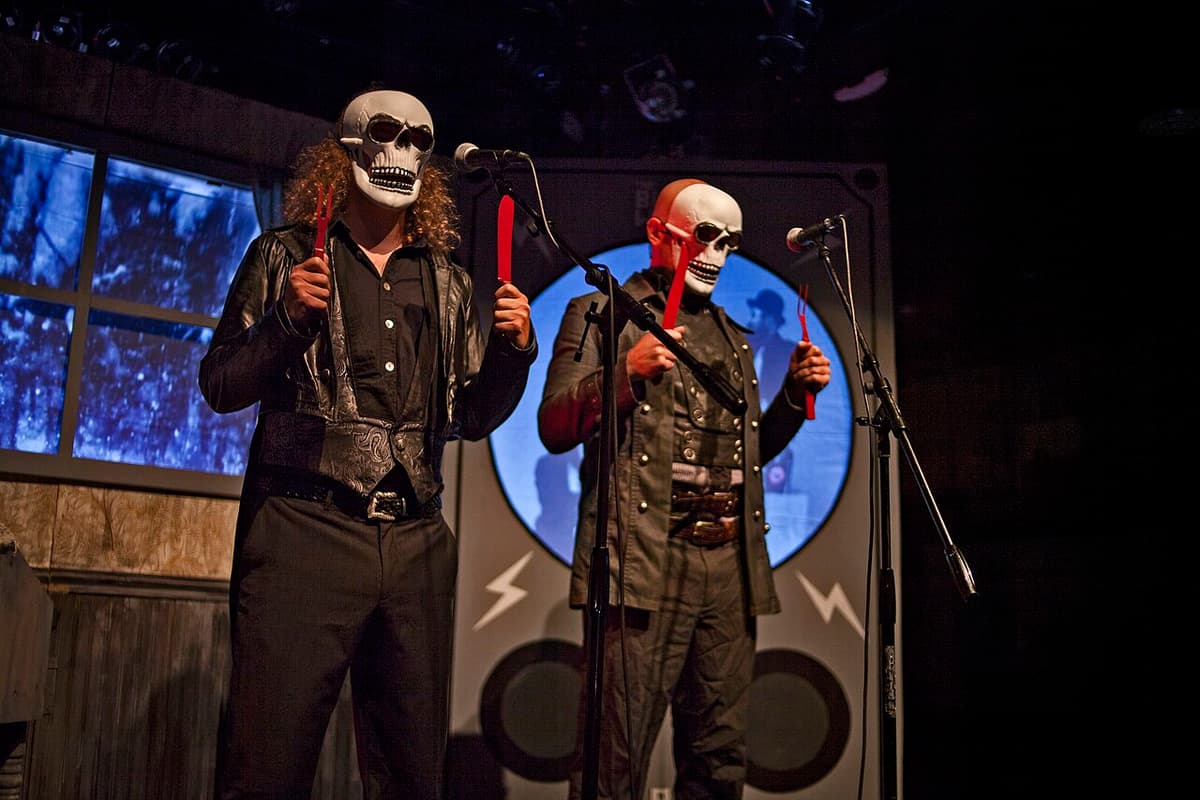
American Murder Song sounds like a dusty, leather-bound book of frontier history coming to life in a candlelit parlor. The music is anchored by rhythmic piano and sparse acoustic instrumentation, creating a stage for vivid, often gruesome tales of 19th-century killers. There is a palpable sense of time and place, specifically the harsh, unforgiving landscapes of early America.
What makes them distinctive is their commitment to the 'murder ballad' as a high-concept art form. Rather than just writing dark songs, Zdunich and Hendelman build entire historical worlds, using vaudevillian charisma and tight vocal harmonies to make the macabre feel strangely inviting. It is folk music with the DNA of musical theater, stripped of its polish and replaced with grit and historical weight.
Start with 'Murder Ballads of 1816: The Year Without a Summer' to understand their core aesthetic. It perfectly captures the blend of historical research and theatrical dread that defines their sound, serving as a gateway to their more expansive conceptual works like 'The Donner Party'.
American Murder Song (sometimes abbreviated AMS) is an American musical act founded in 2016 by cult film composers and performers Terrance Zdunich and Saar Hendelman. The project uses the murder ballad genre to explore American history, especially 19th-century America. In American Murder Song, Saar and Terrance play the role of roguish balladeers Mister Storm and Mister Tender who make a pact with the Bible's Cain to chronicle the tales of killers, known as Survivors, who bear The Mark, an American Mark of Cain. By way of live shows, music videos and albums, American Murder Song has so far explored 1816, also known as "The Year Without a Summer", The Donner Party's deadly journey of 1846 and "The Killing Place", a metaphoric house of Cain where all murder ballads reside.
Cassette uses generative AI to enrich its catalog. How we use AI →