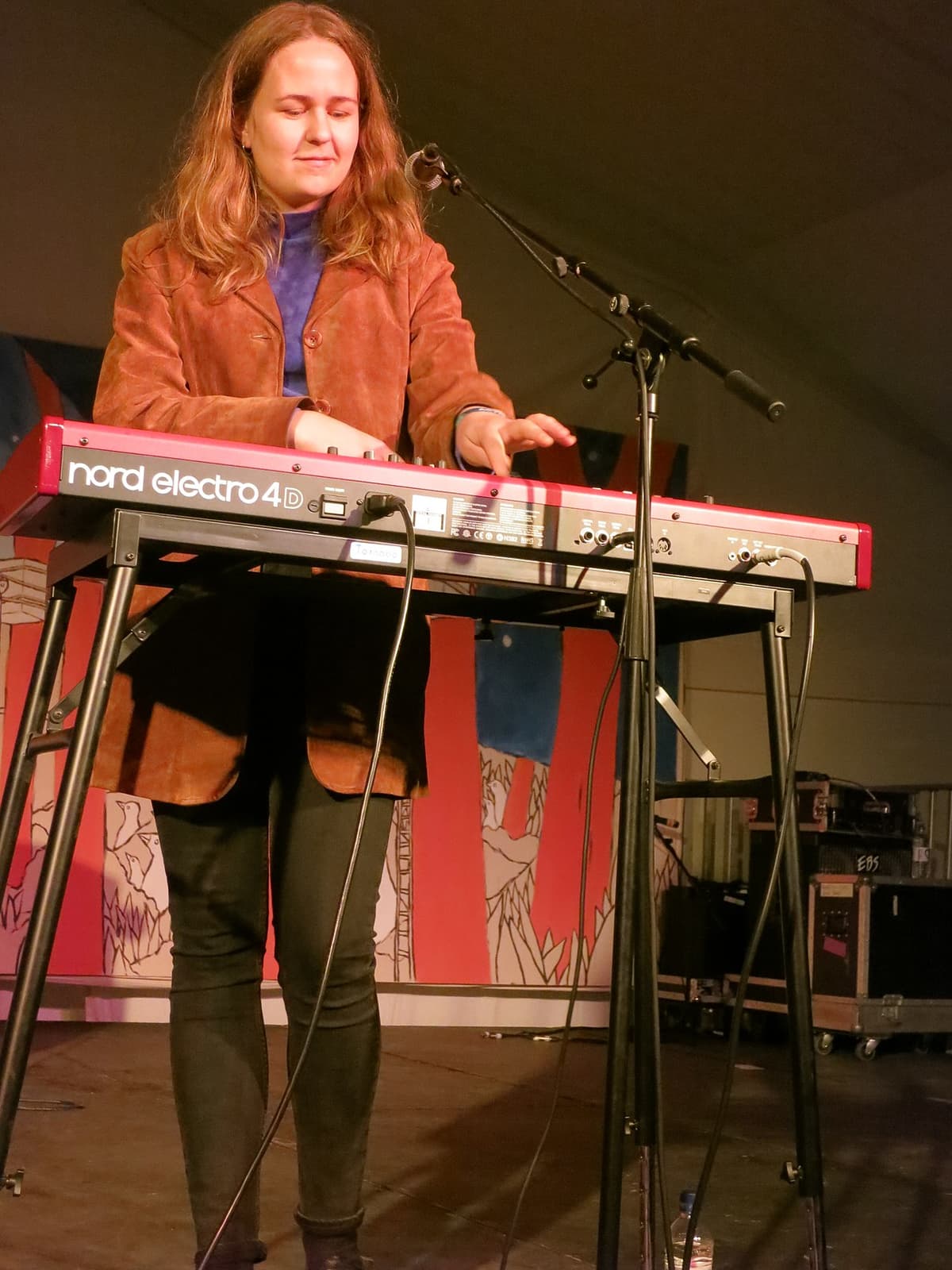
Alice Boman
Fragile, piano-led sketches that feel like overheard secrets. Hushed vocals and tape-hiss textures for moments of deep quiet and solitary reflection.
Fragile, piano-led sketches that feel like overheard secrets. Hushed vocals and tape-hiss textures for moments of deep quiet and solitary reflection.
Alice Boman’s music sounds like the air inside a room that hasn't been opened in years. It is incredibly intimate, built around skeletal piano melodies and a voice that rarely rises above a whisper. There is a profound sense of space in her recordings, often retaining the natural room noise and tape hiss of her original bedroom demos. It feels less like a performance and more like a private internal monologue set to music.
What makes her distinctive is the 'sketch-like' quality of her compositions. She embraces imperfection, allowing the mechanical sounds of the piano and the fragility of her breath to become part of the arrangement. While many dream pop artists use reverb to create vast, cosmic landscapes, Boman uses it to make the walls feel closer, creating a claustrophobic yet comforting cocoon of sound.
Start with the 'Skisser' EP to hear her at her most raw and unfiltered. It captures the essence of her 'sketches' philosophy. From there, move to 'Dream On' to see how those same intimate impulses translate into more lush, fully realized studio arrangements without losing their essential, quiet soul.
Alice Maria Boman (born 2 December 1987) is a Swedish singer-songwriter and musician.
Shares slowcore, bedroom production, dusty, indie folk (subgenre)
Shares slowcore, indie folk, dream pop, tender (subgenre)
Shares slowcore, dusty, indie folk, dream pop (subgenre)
Shares slowcore, bedroom production, dusty, indie folk (subgenre)
Shares sparse bare, slowcore, winter, indie folk (production)
Shares slowcore, indie folk, dream pop, tape saturation (subgenre)
Shares bedroom production, winter, indie folk, dream pop (signature)
Shares bedroom production, indie folk, raw, tender (signature)
Shares slowcore, indie folk, dream pop, candlelit (subgenre)
Shares slowcore, bedroom production, indie folk, dream pop (subgenre)
Cassette uses generative AI to enrich its catalog. How we use AI →

