Aerodrom
Polished Yugoslavian new wave with sun-drenched guitar hooks and a romantic heart. Perfect for long drives and nostalgic summer evenings.
Polished Yugoslavian new wave with sun-drenched guitar hooks and a romantic heart. Perfect for long drives and nostalgic summer evenings.
Aerodrom captures a very specific kind of Central European cool, blending the sharp edges of new wave with the melodic accessibility of classic pop-rock. Their sound is defined by Jurica Pađen's tasteful guitar work, which often features that shimmering eighties chorus effect, and a rhythm section that isn't afraid to lean into a subtle reggae bounce or a driving rock beat. It feels like a postcard from a more optimistic era.
What truly distinguishes them is their ability to pivot from the complex, progressive structures of their early work to the lean, hit-focused songwriting of their peak years. There is a persistent sense of romantic longing in the vocals, often delivered with a smooth baritone that feels both intimate and anthemic. It is music that feels deeply rooted in the urban culture of Zagreb while reaching for a universal pop appeal.
Start with the album 'Obične ljubavne pjesme' to hear them at their commercial and creative zenith. It contains their most enduring hits and perfectly balances their new wave sensibilities with the kind of songwriting that stays in your head for days. It is the essential entry point for anyone exploring the rich history of the Ex-Yu rock scene.
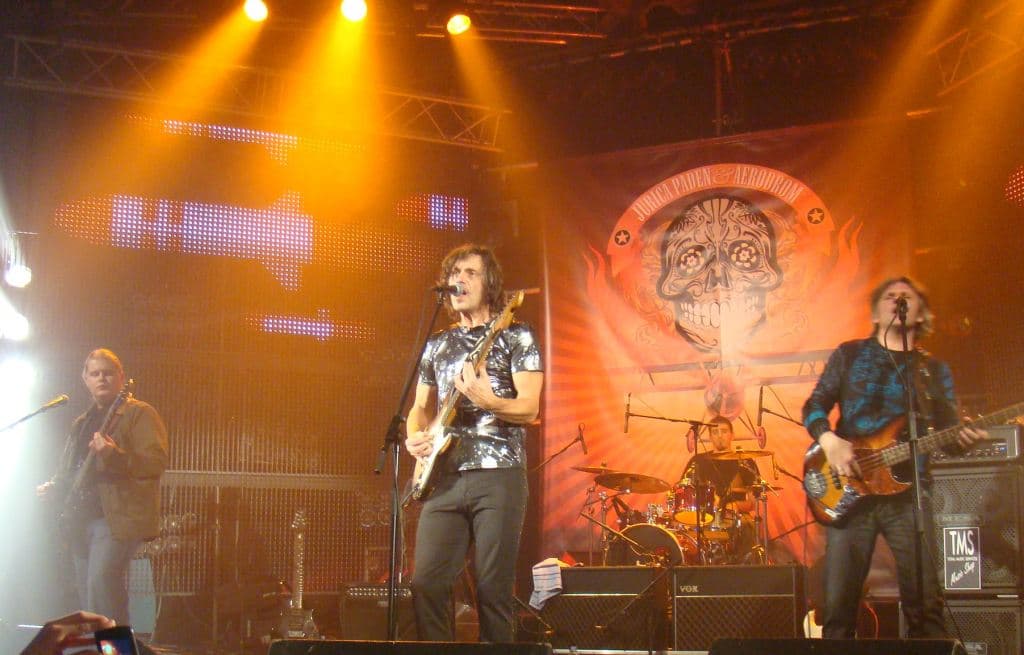
Aerodrom (lit. 'Airport') is a Croatian and Yugoslav rock band formed in Zagreb in 1978. Formed and led by guitarist, vocalist and principal songwriter Jurica "Jura" Pađen, Aerodrom was a popular act of the Yugoslav rock scene. The group was formed by guitarist Jurica Pađen, who had already gained prominence as a member of Grupa 220 and Parni Valjak. The first lineup featured, beside Pađen, vocalist Zlatan Živković, bass guitarist Remo Krstanović Cartagine, drummer Paolo Sfeci and keyboardist Mladen Krajnik. Initially, the band performed progressive rock, their 1979 debut Kad misli mi vrludaju bringing them attention of the public and the media. With the 1981 album Tango Bango, the group turned towards simpler, new wave-influenced sound, scoring several hits. After the album release, Živković left the band and the vocal duties were taken over by Pađen. Aerodrom's third studio album Obične ljubavne pjesme, released in 1983, was their biggest commercial success. It was followed by two more successful pop rock-oriented albums, the last one recorded in the lineup featuring Pađen on guitar and vocals, Cartagine on bass guitar and Živković—who had returned to the band in 1986—on vocals and drums. The group disbanded in 1987, Pađen continuing his career as guitarist in the highly popular band Azra. In 1993, he formed his Pađen Band, releasing three albums with the group, before reforming Aerodrom in 2000. The group has released four studio albums since, with the 2007 album Rock @ Roll being the band's first release to feature Pađen as the sole remaining original member. Since its release the group has been performing under the name Jurica Pađen & Aerodrom.
Shares baritone, harmonized, deadpan (vocal style); analog warmth, studio polished, dry intimate (production style)
Shares pop rock, new wave, art rock (subgenres); analog warmth, studio polished (production style)
Shares new wave, pop rock, progressive rock (subgenres); analog warmth, studio polished (production style)
Shares analog warmth, studio polished, dry intimate (production style); new wave, pop rock (subgenres)
Shares analog warmth, studio polished, dry intimate (production style); new wave, art rock (subgenres)
Shares new wave, pop rock, art rock (subgenres); analog warmth, studio polished (production style)
Shares analog warmth, studio polished, dry intimate (production style); new wave, pop rock (subgenres)
Shares nostalgic, playful, wistful (moods); new wave, pop rock, art rock (subgenres)
Shares new wave, pop rock, art rock, analog warmth (signature)
Cassette uses generative AI to enrich its catalog. How we use AI →