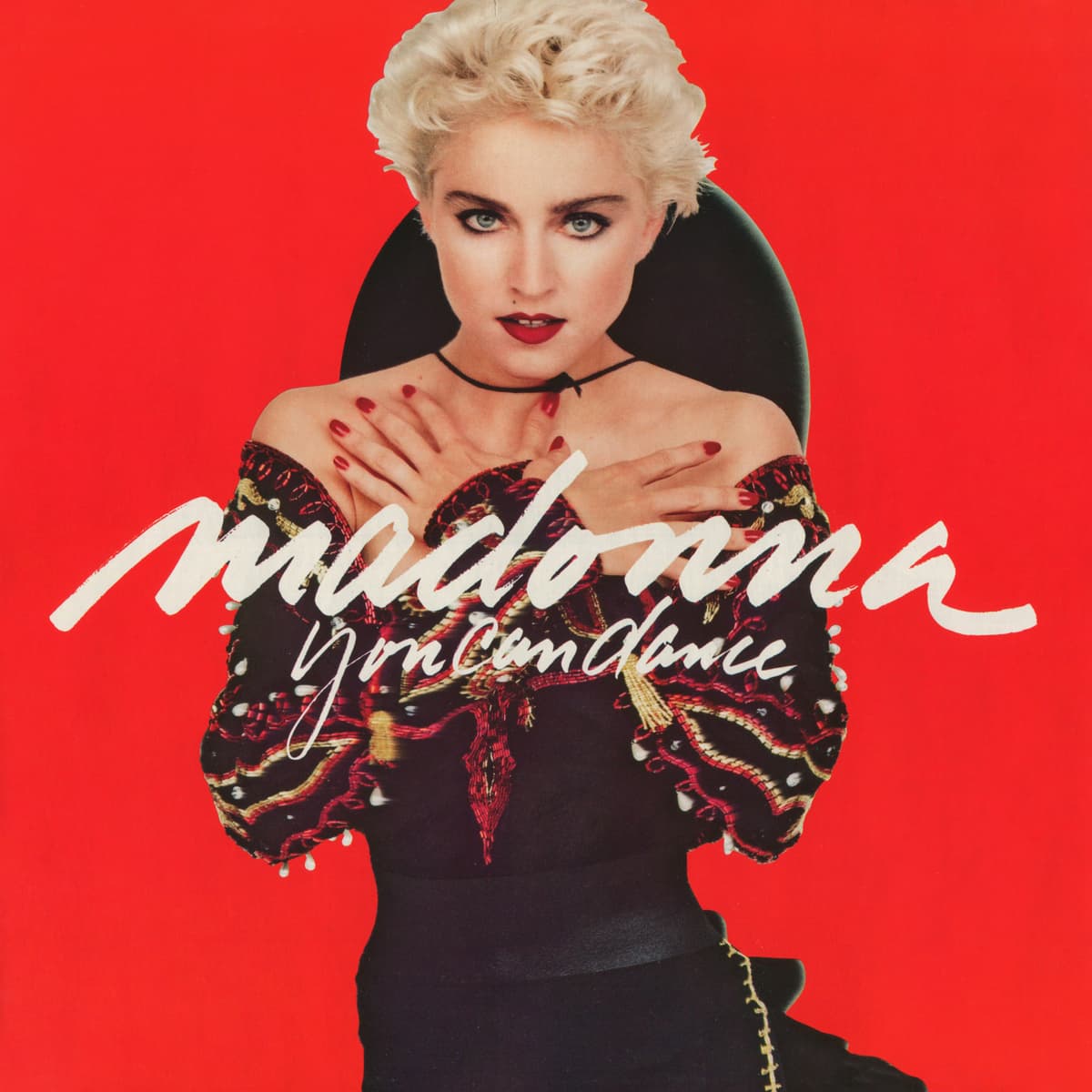
A continuous club-focused reimagining of her early hits, defined by stuttering vocal edits, extended percussion breaks, and high-energy synth-pop grooves.
You Can Dance is a masterclass in the mid-80s remix aesthetic, transforming Madonna's early radio staples into sprawling, rhythmic journeys.
You Can Dance is a masterclass in the mid-80s remix aesthetic, transforming Madonna's early radio staples into sprawling, rhythmic journeys. Unlike a standard greatest hits collection, this album functions as a continuous suite, where the focus shifts from the hooks to the groove. It captures a moment when studio technology began to allow for radical deconstruction: vocal lines are chopped and echoed, instrumental passages are stretched to the breaking point, and the percussion is pushed to the absolute front of the mix. It is the sound of the New York club scene being exported to the global stage.
Released in November 1987, You Can Dance was Madonna's first retrospective release and a pioneering entry in the remix album format. Originally planned as an EP in 1986, it was delayed to allow the True Blue campaign to finish its run. The album features seven tracks, including the new single Spotlight and six extended remixes of hits from her first three albums. Sonically, the record is defined by the work of legendary remixers like Shep Pettibone and John Jellybean Benitez, who utilized then-cutting-edge studio techniques such as vocal stuttering, panning echoes, and extended instrumental dub breaks. Critical reception was largely positive, with Robert Christgau of The Village Voice praising the way the remixes reached out and grabbed the listener. AllMusic later noted its importance as a historical artifact of 80s club culture. It remains the second best-selling remix album of all time, cementing Madonna's status as a dancefloor innovator who could successfully re-package her pop hits for a specialized club audience.
Put this on for
keeping the momentum going during a late-night rooftop gathering in the citypracticing sharp choreography in a mirror-lined studio with the volume maxedfueling a high-stakes deadline push when you need rhythmic consistencyrevisiting familiar melodies through a prism of heavy club-focused percussionwalking through a neon-lit urban center while the bass syncs with your stridetransforming a mundane housecleaning session into a high-energy solo performance
Moments worth waiting for
The drum-and-bass intro of Spotlight leading into the iconic Spotlight, shine bright hook
The way the familiar Holiday synth line is teased for several minutes before the full groove kicks in
The aggressive use of vocal stuttering and echoes on Over and Over that turn her voice into a rhythmic instrument
The breakdown in Where's the Party where everything drops out except the hi-hat and a pulsing bass synth
Sounds like
1987s production with a 1980s soul
Lyrical territory
party_celebration, love_romantic, identity
03Deviation
You Can Dance · vs · Madonna
Artist
This Album
Joyful
Mood · ↓ −9% less than usual
On this album, joyful sits about 9% less prominent than across the rest of the artist's catalogue.