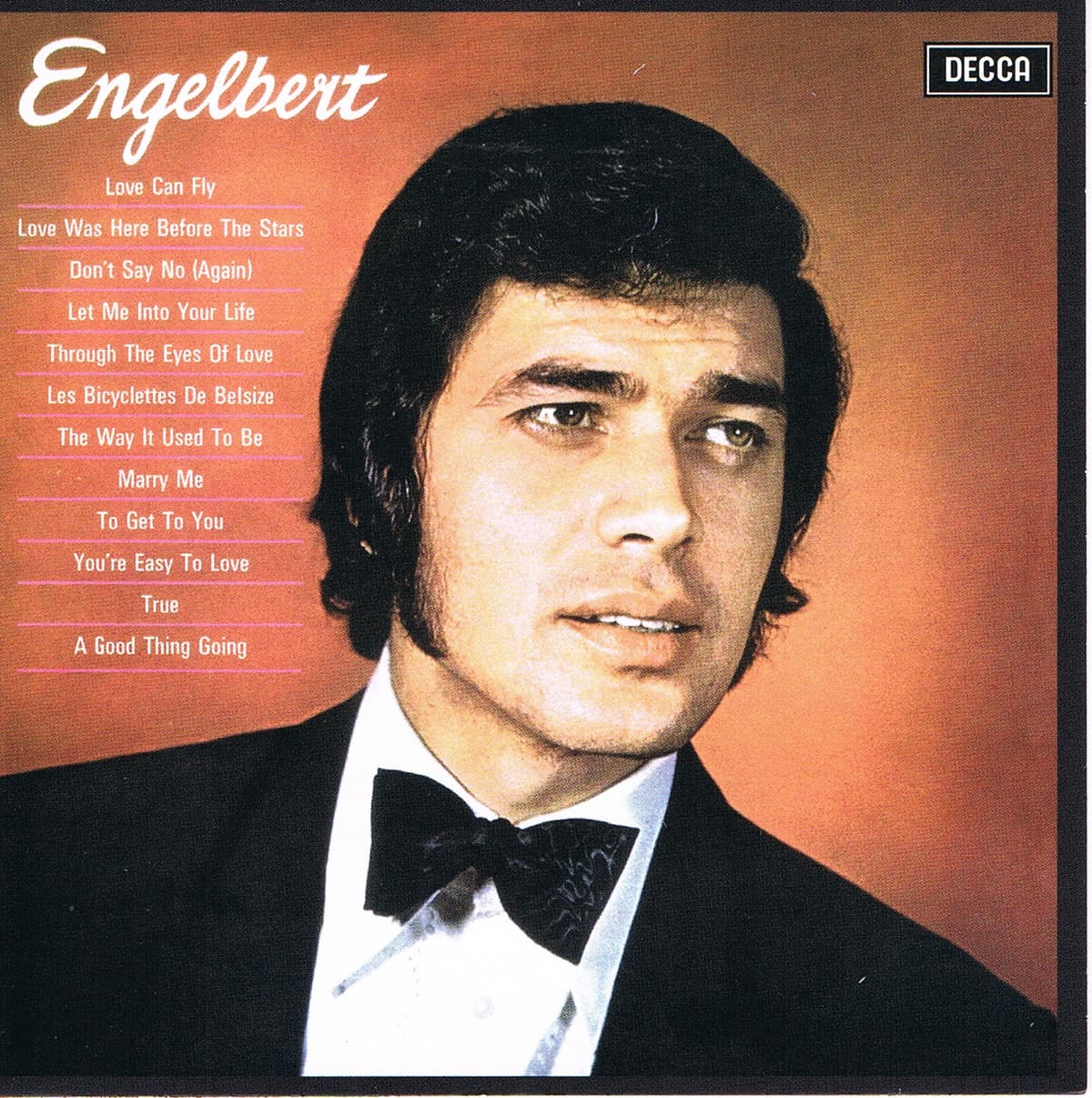
Engelbert
Engelbert Humperdinck's 1969 album, "Engelbert," is a quintessential collection of lushly orchestrated easy listening pop, featuring his iconic velvet baritone delivering romantic ballads with sophist
1969 · Parrot
Engelbert Humperdinck's 1969 album, "Engelbert," is a quintessential collection of lushly orchestrated easy listening pop, featuring his iconic velvet baritone delivering romantic ballads with sophist
1969 · Parrot
Imagine stepping into a dimly lit, elegant lounge in 1969, where every note is designed to sweep you off your feet. "Engelbert" is the sound of pure, unadulterated romance and sophisticated melancholy, delivered by one of the era's most distinctive voices. With its grand orchestral swells, tender piano melodies, and Humperdinck's powerful, crooning baritone, this album is a masterclass in easy listening pop. It's for those moments when you want to feel deeply, whether it's the joy of new love or the bittersweet ache of a love lost. A timeless classic that wraps you in a warm, nostalgic embrace.
How does Engelbert sound next to the rest of Engelbert Humperdinck's catalogue?
The production is pushed a touch harder into studio polished than this artist usually allows.
Cassette uses generative AI to enrich its catalog. How we use AI →