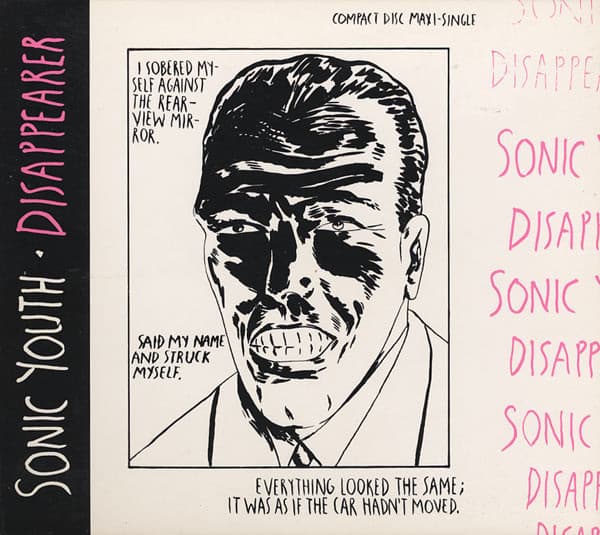
Disappearer
A moody snapshot of the Goo era, blending thick, detuned guitar textures with a sense of urban noir and melodic dissonance.
June 1990 · DGC
A moody snapshot of the Goo era, blending thick, detuned guitar textures with a sense of urban noir and melodic dissonance.
June 1990 · DGC
Disappearer captures Sonic Youth at a pivotal moment of crystallization. It is the sound of the New York underground emerging into the daylight of a major label budget without scrubbing away the soot. The title track is a masterclass in tension, built on a foundation of thick, chorused guitars that seem to hum with the electricity of a city grid. It feels like a long, deliberate exhale, balancing a newfound melodic sensibility with the jagged, detuned dissonance that defined their earlier work. What makes this specific release distinctive is the sense of space and atmosphere. Unlike the sprawling chaos of their 80s output, these tracks feel contained and purposeful. The production leans into a warm, analog saturation that gives the guitars a physical weight, while the vocals are treated as another instrument, often whispered or buried just beneath the surface of the noise. The inclusion of the Dirty Boots demo and the cover of The Seeds' That's All I Know (Right Now) provides a glimpse into the band's internal mechanics, showcasing their ability to bridge 60s garage rock energy with avant-garde textures. Owning this single is about capturing a specific mood of urban isolation. It is the perfect companion for those moments when the world feels slightly out of focus. The music doesn't demand your attention with aggression; instead, it invites you to get lost in its layers of feedback and rhythmic precision. It is a document of a band at the height of their powers, proving that they could navigate the mainstream on their own terms, turning a pop-adjacent single into a haunting, atmospheric journey through the shadows of the 1990s.
How does Disappearer sound next to the rest of Sonic Youth's catalogue?
Melancholic saturates this record far more than the artist's norm.
Cassette uses generative AI to enrich its catalog. How we use AI →