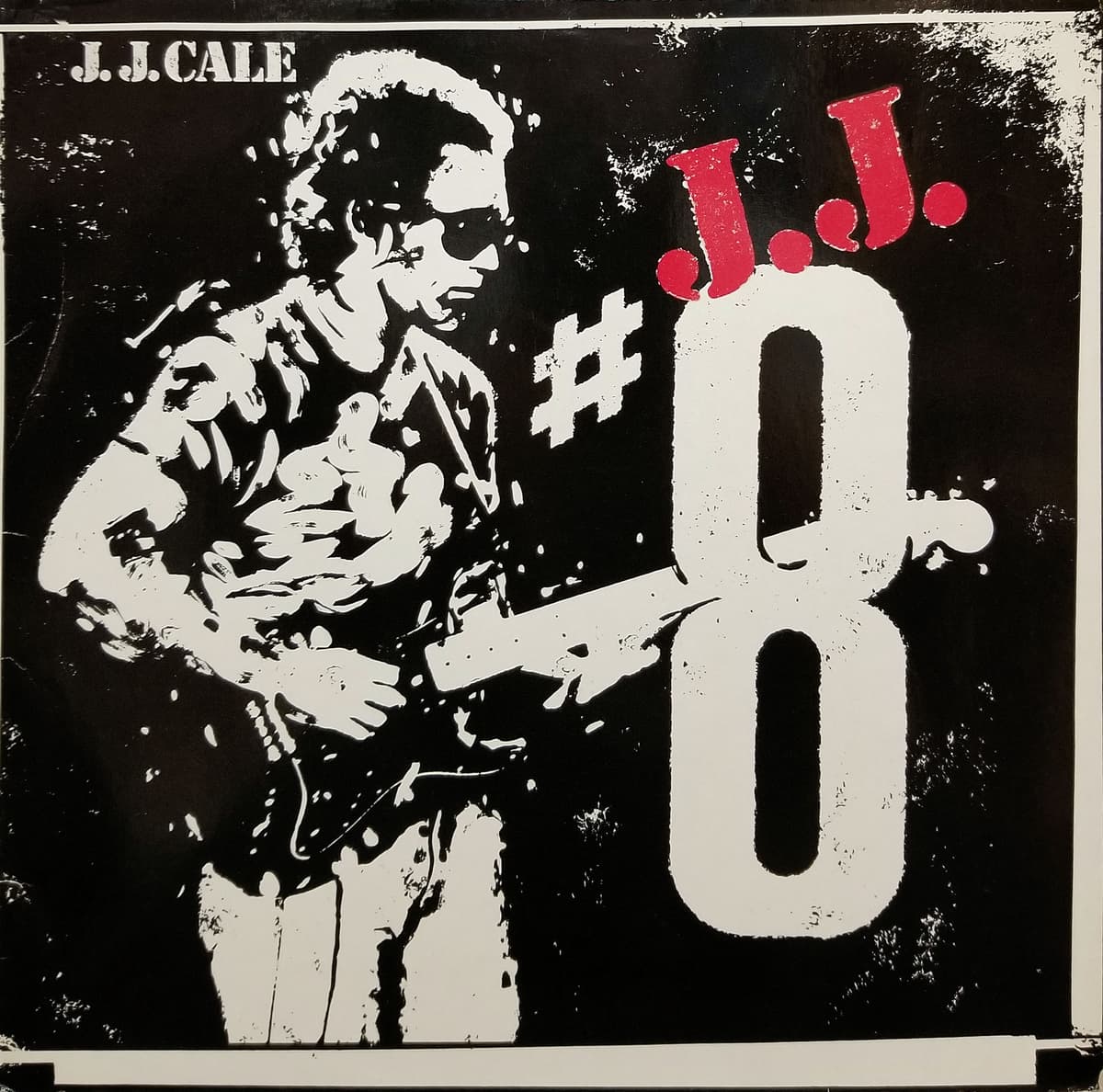
#8
A masterclass in the Tulsa Sound, blending dry drum machines with fluid blues guitar. Whispered, late-night grooves that feel like a dusty roadside secret.
1983 · Fálkinn
A masterclass in the Tulsa Sound, blending dry drum machines with fluid blues guitar. Whispered, late-night grooves that feel like a dusty roadside secret.
1983 · Fálkinn
This is the sound of a man who has perfected the art of doing just enough. Released in 1983, #8 completely ignores the neon-soaked synth trends of its era, opting instead for a sepia-toned world of dry drum machines and humid guitar lines. It feels like a private performance in a small, carpeted room where the air is thick with smoke and the only light comes from the glowing tubes of a Fender amplifier. The groove is relentless but never hurried, a steady pulse that mimics the rhythm of a long-distance drive through the American heartland.
How does #8 sound next to the rest of J.J. Cale's catalogue?
The writing leans a touch further into storytelling than the rest of the catalogue.
Cassette uses generative AI to enrich its catalog. How we use AI →