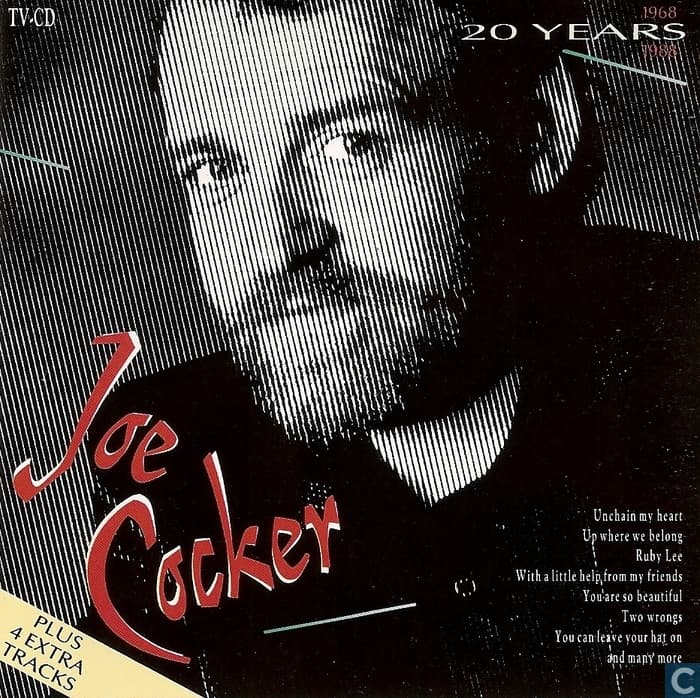
20 Years
A career-spanning journey through two decades of grit and soul. Cocker’s gravelly baritone transforms classic hits into raw, sweat-soaked emotional exorcisms.
1988 · EVA
A career-spanning journey through two decades of grit and soul. Cocker’s gravelly baritone transforms classic hits into raw, sweat-soaked emotional exorcisms.
1988 · EVA
Listening to this collection is like watching a time-lapse of a storm front moving across a landscape. It begins with the raw, lightning-strike energy of the late sixties, where Joe Cocker’s voice sounds like it is physically tearing through the fabric of the songs. By the time the tracklist reaches the mid-eighties, the storm has settled into a steady, powerful rain. The grit remains, but it is framed by the polished, cinematic production of a different era. This is not just a collection of hits; it is a document of a performer who treats every lyric like a confession and every chorus like a survival tactic. What makes this specific compilation distinctive is the jarring but fascinating juxtaposition of styles. You hear the Hammond organ and psychedelic soul of his Woodstock years sitting right next to the gated reverb and synthesizers of his 1980s comeback. It highlights how Cocker’s instrument, that unmistakable, gravel-pit baritone, remained the anchor even as the musical world shifted beneath his feet. It is an essential ownership for anyone who appreciates the art of the song interpreter, showing how a singer can take a Beatles or Box Tops track and make it sound like it was written in his own blood. Owning this on cassette, as the original release suggests, adds a layer of tape-saturated warmth that suits the material perfectly. The hiss of the tape feels like a natural extension of Cocker’s own raspy delivery. It is an album for those moments when you need to feel the weight of human experience expressed through song, moving from the desperate heights of a soul scream to the tender, quiet vulnerability of a piano ballad. It is a masterclass in emotional endurance.
How does 20 Years sound next to the rest of Joe Cocker's catalogue?
Cathartic saturates this record far more than the artist's norm.
Cassette uses generative AI to enrich its catalog. How we use AI →